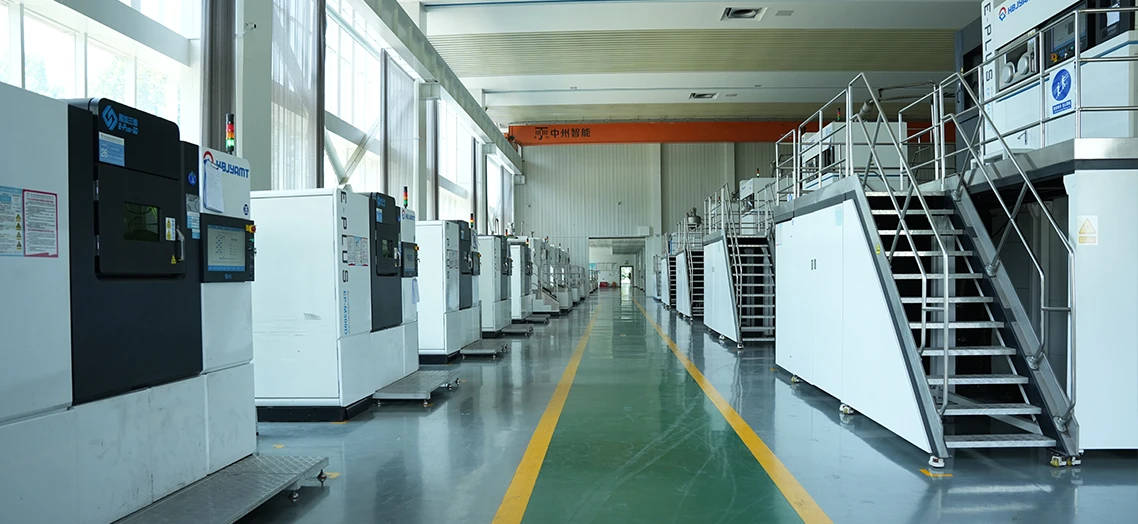
Jingye Future Smart Manufacturing, a subsidiary of Chinese steel giant Jingye Group, has embarked on a large-scale investment in additive manufacturing. As part of a $700 million project, they are constructing an industrial complex to house 20 production lines and 400 metal 3D printers. This scale clearly demonstrates that the Asian metal 3D printing market has moved beyond the experimental phase and entered the realm of mass production.
Smartphones and artificial intelligence drive demand
The new facility will serve the demands of consumer electronics and network infrastructure. Within Chinese industry, this domain is commonly referred to as 3C, encompassing computers, communications, and consumer electronics.
A significant portion of the printing capacity will be optimized for smartphone structural components—such as hinges for foldable devices—as well as liquid-cooling components for AI data center servers. In the latter segment, EPlus3D previously signaled a surge in demand when it announced securing over 50,000 orders for AI server cooling components. Given that Jingye has been a key customer of EPlus3D for years, a portion of the 400 new systems will undoubtedly be supplied by them.
Fierce internal competition instead of national champions
Western business models frequently rely on designated corporations that dominate the market with state backing. In contrast, China pursues a divergent strategy: central economic policy intentionally intensifies rivalry among domestic market players.
For policymakers, which specific Chinese company emerges as the market leader is secondary. The priority is that the victor is a Chinese enterprise, with continuous domestic competition forcing the development of the most efficient, cost-effective, and advanced manufacturing technologies. Jingye’s entry poses a direct challenge to other market incumbents, such as BLT, which specializes in components for foldable smartphones.
Shifting center of gravity: from hardware to services
Global data indicates that the industry's structural framework is undergoing a transformation. While hardware manufacturers previously dictated the pace of development, raw material producers, major steel conglomerates, and contract manufacturers are now taking the initiative.
When a major steel industry player like Jingye Group commits substantial capital to powder bed metal printing and metal injection molding, it validates the industrial maturity of the technology. System manufacturers need not view this shift with apprehension: the expansion of the service sector and feedstock providers enlarges the overall market, ultimately driving increased equipment adoption and higher-volume hardware orders over the long term.
Frequently Asked Questions
Why is a steel giant investing in metal 3D printing?
Traditional steel manufacturers are pursuing higher value-added markets. Metal 3D printing and metal injection molding allow them to expand beyond raw material production into the volume manufacturing of precision components.
What does the 3C sector represent in metal 3D printing?
3C is an umbrella term for computers, communication equipment, and consumer electronics. In this field, metal 3D printing is primarily leveraged for manufacturing smartphone hinges, watch cases, and thermal management components.
How does the Chinese market strategy differ from the Western approach?
Rather than creating isolated national champions, Chinese economic policy drives intense internal competition among domestic manufacturers. This rivalry accelerates technological development and compresses production costs.
Source: 3dprint.com / Matt Kremenetsky
Share: