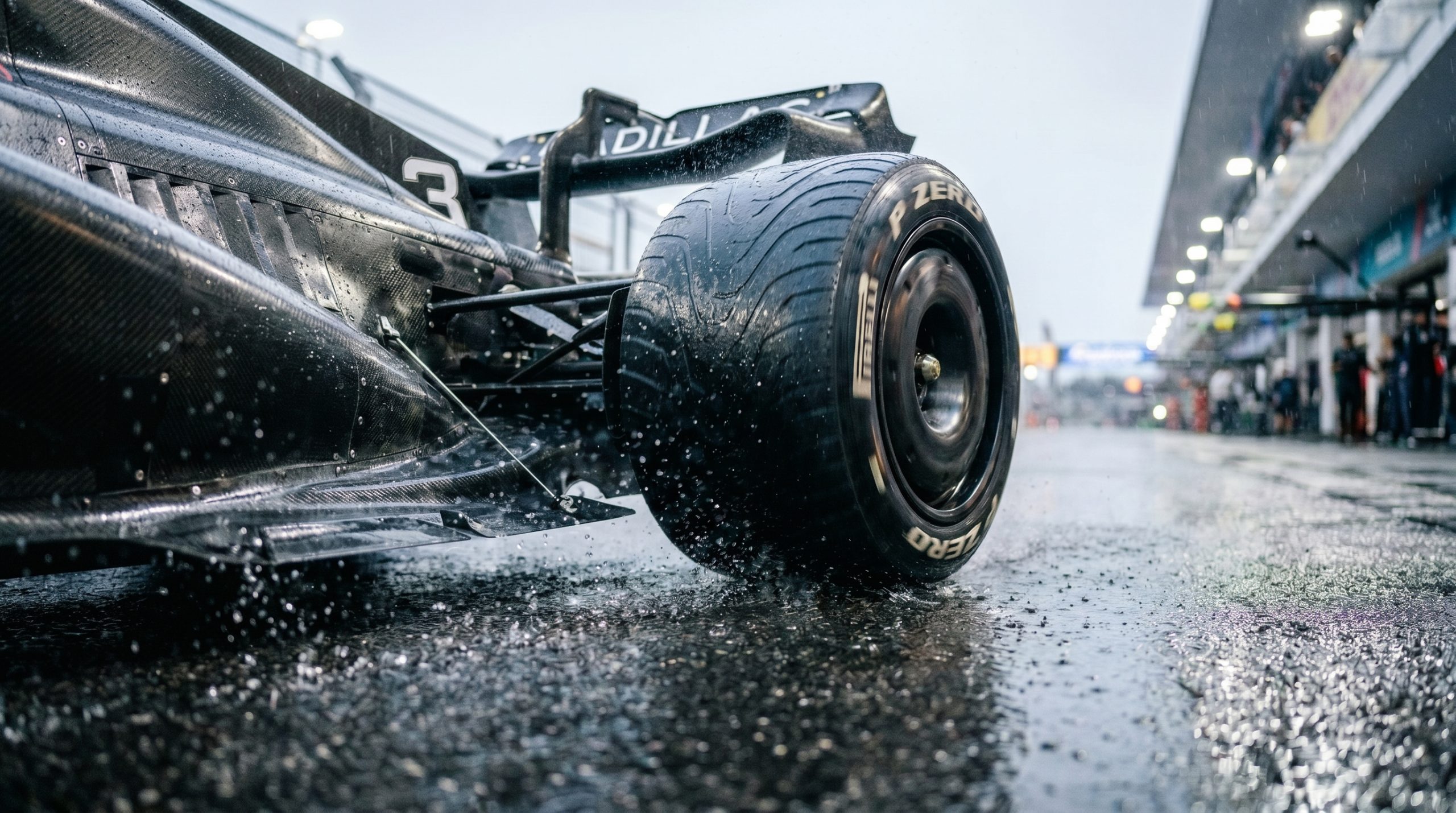
Cadillac has charged into the ruthless arena of Formula 1 utilizing SLA 3D printing technology, where every wasted second can cost critical grid positions. Imagine the pressure of a brand-new outfit having to prove itself on the scorching asphalt of the Miami Grand Prix while veteran rivals hold decades of operational advantage. However, Cadillac did not leave its debut to chance. Engineers deployed seven industrial-grade systems to accelerate development workflows to velocities conventional manufacturing could never match. This shifts the paradigm entirely.
Let’s face it: for any new constructor, time is the ultimate adversary. In collaboration with the specialists at 3D Systems, the Cadillac F1 team established a machine fleet capable of producing parts directly for wind tunnel testing—and even final-use components. Facing tight deadlines ahead of the Australian debut, these machines ran around the clock. That is precisely the point: speed and precision are not merely optional here; they are prerequisites for survival. The equation is straightforward: whoever iterates and tests faster, develops faster.

In my assessment—and I may stand corrected—a new constructor today would stand no viable chance of competing respectably within such a compressed preparation window without 3D printing. Engineers selected materials such as Accura Xtreme White 200, distinguished by its exceptional impact resistance and toughness. They also deployed Accura Xtreme Black resin for functional prototyping alongside high-performance composites. These specialized polymers withstand substantial mechanical loads and thermal extremes. The distinction is critical: these are not merely scale display models, but robust, load-bearing functional parts.
So, what is the next step?
SLA 3D printing beyond the wind tunnel
Do not assume Cadillac's additive initiatives stop at single-seaters. Parent company General Motors has previously showcased the capabilities of additive manufacturing at scale. A prime example is the ultra-luxury Cadillac CELESTIQ, which integrates over 130 production 3D-printed components. This engineering ethos transitioned directly into the Formula 1 program, where technical regulations strictly govern additive applications. The 2026 technical regulations already dedicate a specific framework to approved materials and structures, including suspension components and exhaust geometries.
Automotive suppliers across Central and Eastern Europe are increasingly recognizing this potential. While regional engineering firms and prototype developers are not building dedicated F1 chassis, they face comparable engineering hurdles daily when servicing premium OEM clients. When a tooling iteration or component costs thousands of dollars, minimizing re-fabrication cycles driven by design flaws is essential. SLA 3D printing reduces this error rate significantly while giving engineers absolute design freedom to execute complex topologies.

Ultimately, Cadillac's entry into the pinnacle of motorsport represents a profound technological demonstration. The car is propelled not solely by the track pedigree of drivers like Sergio Pérez and Valtteri Bottas, but by an advanced digital infrastructure optimizing aerodynamic efficiency ahead of every Grand Prix. 3D Systems' Application Innovation Group works closely with trackside and factory engineers to maximize the technology's performance ceiling. This technological cross-pollination will inevitably transfer higher-durability, lightweight components to mainstream road vehicles.
That is the policy landscape. Here is the technical breakdown.
Additive manufacturing is no longer an emerging concept; it is an established industrial instrument of the present. Formula 1's governing body has acknowledged that regulating this technology is vital for budget cap management and structural safety assurance. Whether deploying metal-based processes or advanced photopolymers, the objective remains constant: engineering faster, safer, and more aerodynamically efficient race cars. Crucially, this level of additive technology is accessible today if you understand how to harness its capabilities.
Frequently Asked Questions
What specific advantages does SLA 3D printing deliver in F1?
It enables rapid turnaround of wind tunnel scale models and facilitates mass reduction in topologically complex components.
What materials does the Cadillac F1 team utilize?
They primarily employ Accura Xtreme series engineering resins and high-performance composites to achieve elevated tensile strength and thermal stability.
Does the FIA regulate 3D printing in Formula 1?
Yes, the 2026 technical regulations include explicit mandates governing homologated materials and permissible additive component categories.
Source: voxelmatters.com / Tess Boissonneault
Share: