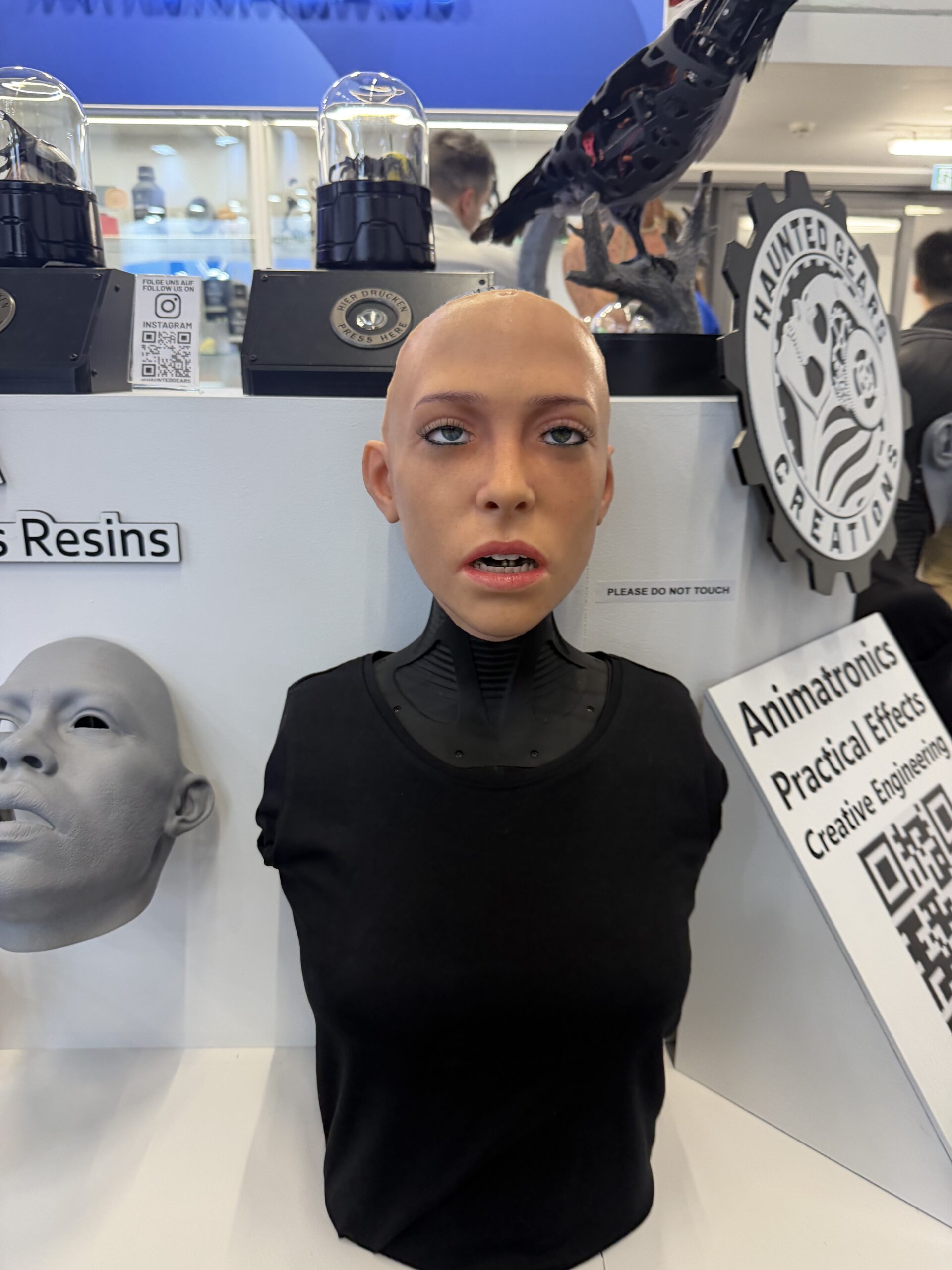
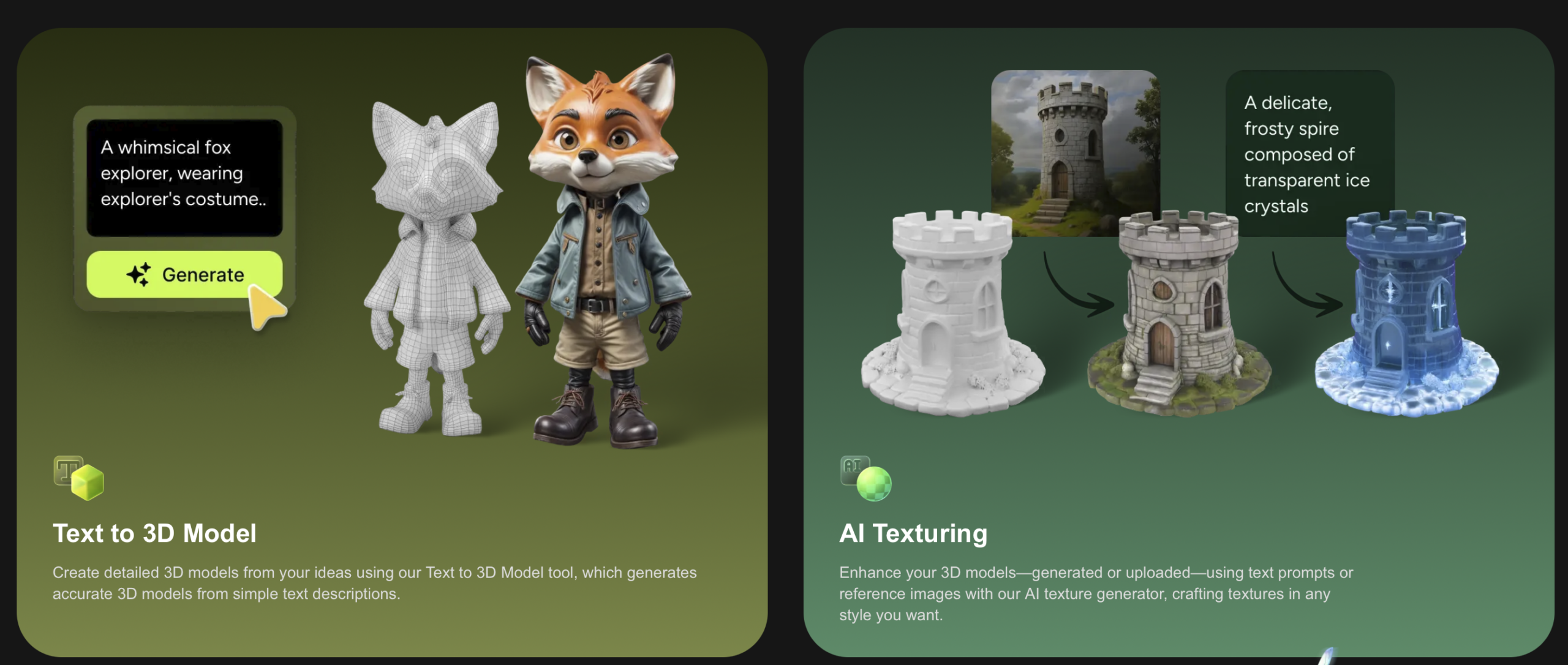
FlashForge took a definitive step toward the future by integrating Meshy AI directly into its slicing software ecosystem. Generating a print-ready 3D asset from a simple text prompt in seconds is no longer conceptual—it is the exact level of streamlined workflow with which the manufacturer is challenging the competition.
When Software Outpaces the Designer
Market leaders like Bambu Lab and Creality have been setting an aggressive pace, requiring FlashForge to innovate decisively to maintain competitive parity. The new Flash Studio suite now enables users to generate printable mesh geometry directly from natural language prompts. This is far more than a novelty feature—it is a paradigm shift.
In my experience—and I may be mistaken—the majority of users no longer want to spend hours tinkering with CAD software just to create a custom figurine or decorative item. You simply describe what you want to see, and Meshy AI generates the STL file, even applying textures directly to the model. That is precisely the point: technology is finally serving humans, rather than the other way around.
Historically, the steep learning curve of CAD modeling has represented the single largest barrier to entry in 3D printing.
Creator 5: Hardware Engineered for Multi-Color Execution
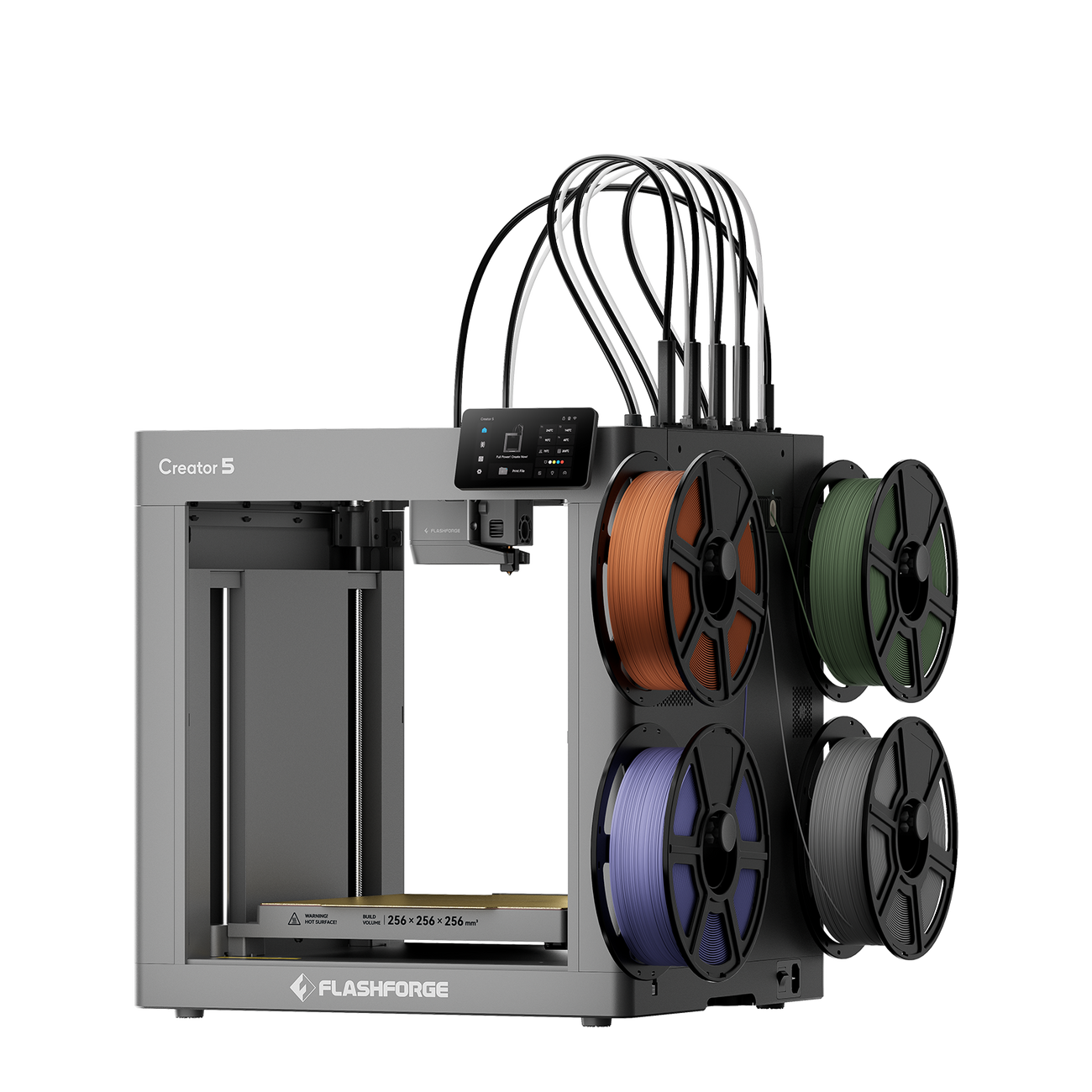
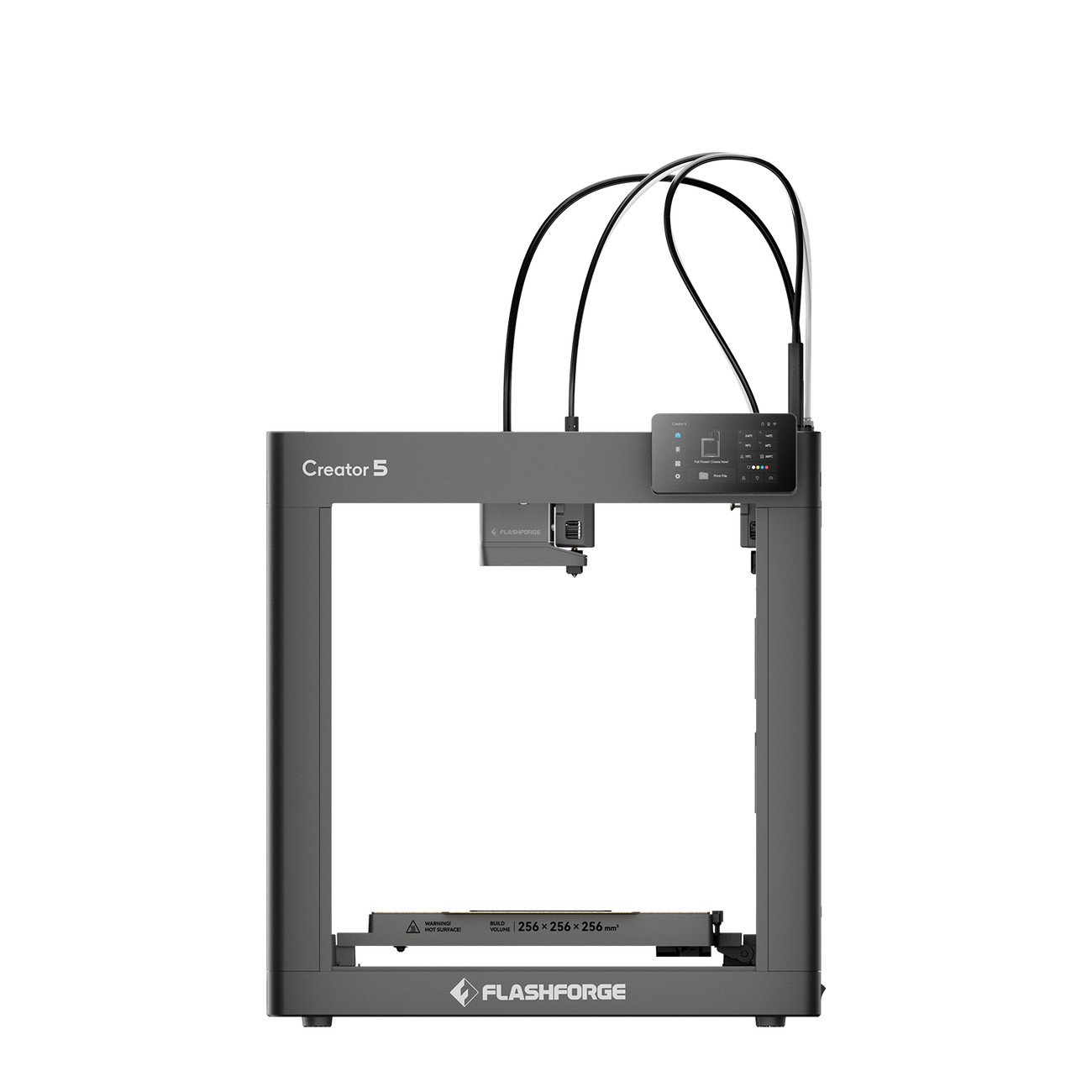
The physical execution of these AI-generated assets is handled by the Creator 5, positioned at an approximate price point of $800. Configured with four independent toolheads, this architecture presents a compelling production advantage for workshops seeking cost-effective, multi-material capabilities.
A key engineering highlight of the platform is its 'zero-purge' architecture, eliminating the excessive waste and cycle times associated with traditional purge towers during filament swaps. The software automatically maps AI-generated textures across the four active spools, removing the need for tedious manual color assignment in the slicer. The end-to-end setup is achieved in just a few clicks.
That is the policy landscape. Here is the technical breakdown.
Speed and Efficiency in Practical Application
FlashForge rates the Creator 5 at up to four times faster in multi-color workflows compared to single-nozzle purge-dependent systems. This efficiency stems from a rapid 7-second toolhead swap time. From a small-scale manufacturing perspective, reduced cycle times translate directly into improved operational margins.
The core advantage lies in a cohesive ecosystem that abstracts away mechanical complexity. While features like a CoreXY kinematic system, a 256 x 256 x 256 mm build volume, and automated bed leveling are baseline industry standards, FlashForge integrates them into a dependable, enclosed production platform.
So, what is the next step?
The additive manufacturing landscape is clearly transitioning toward centralized, cloud-enhanced pipelines. While open-source purists remain, broad market adoption favors frictionless, turnkey workflows. With this integration, FlashForge directly targets creators who prioritize velocity and ease of use. If the generative output matches market expectations, this approach could significantly disrupt the desktop printing space.
Frequently Asked Questions
Can the AI generate any arbitrary 3D model?
Meshy AI excels at synthesizing organic geometries, character models, and decorative assets. However, dimensionally critical functional parts still require conventional parametric CAD suites.
How much material does the zero-purge architecture save?
Compared to single-extruder purge systems, material savings of 30% to 50% can be achieved by eliminating purge blocks and nozzle wipe sequences during toolhead transitions.
Is an active internet connection required?
Yes, an internet connection is mandatory, as Meshy AI functions as a cloud-based compute service within Flash Studio.
Source: 3dprint.com / Joris Peels
Share: