Under the banner of sustainable 3D printing, promises of a cleaner, zero-waste manufacturing workflow are frequently proclaimed, yet reality often resembles a tangled heap of failed plastic. You stand before the machine, having monitored layer deposition for hours, only for a minor defect to consign the entire project to the scrap bin. This is not merely an operational frustration; it represents a significant environmental issue. This is precisely the core dilemma.
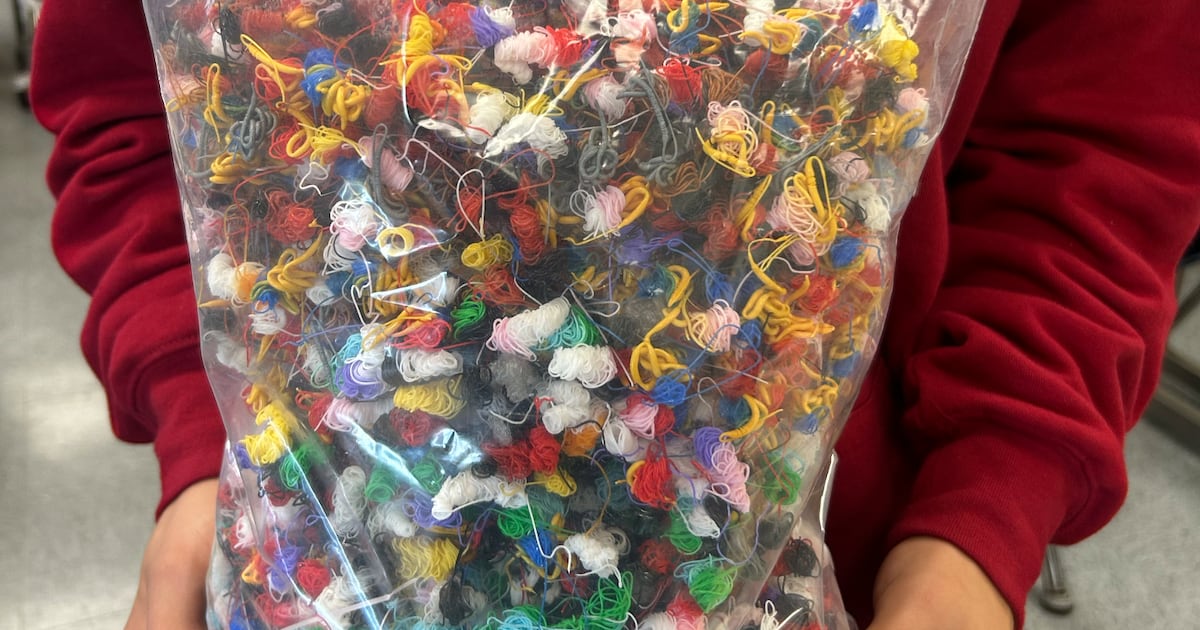
It must be acknowledged that additive manufacturing is no longer restricted to specialized enterprise research facilities. It has expanded into educational institutions, maker spaces, and domestic environments. The technology is more accessible than ever, but concurrent with this expansion, scrap generation has scaled dramatically. Informally dubbed "printer poop" within the community, this scrap—comprising failed builds, support structures, and remnant filament tails—accumulates in growing volumes across workshop spaces.
The Failure Rate No One Talks About
Let us be frank: in additive manufacturing, first-time yield rates are notoriously imperfect. According to investigations by sustainability researcher Cassandra Telenko, print failure rates in academic communal workshops can reach up to 41.1%. Consequently, nearly every second print initiation yields a scrap component. This represents a remarkably high failure metric, clearly illustrating substantial material inefficiency.
Research conducted at King’s College London demonstrates even more critical findings: approximately one-third of all filament deployed for 3D printing culminates as waste material. Consider the implications: theoretically, one out of every three purchased spools is destined directly for municipal disposal. It never becomes part of the functional end-use geometry, acting strictly as sacrificial support structures that are detached and discarded immediately post-processing.
In practical operational experience, many hobbyists routinely write off these material losses as a standard learning curve overhead. However, when this footprint scales to an industrial and institutional level, the paradigm shifts. When dozens of desktop systems in every academic institution continuously extrude excess polymer waste, the fundamental sustainability of desktop additive manufacturing faces rigorous scrutiny. This changes everything.
However, this raises a critical question: what is the true viability of mechanical recycling in this context?
The Municipal Recycling Pitfall
A widespread assumption persists that because thermoplastic filaments like PLA and ABS are theoretically recyclable, circularity is achieved. Unfortunately, this represents a fundamental misunderstanding. Municipal single-stream recycling infrastructure is not engineered to sort diminutive, non-standard additive manufacturing scraps. In typical materials recovery facilities (MRFs), these small geometry fragments simply drop through sorting trommels or cause mechanical jams in processing machinery.
Standard municipal material handling guidelines state that optical and mechanical sorters are largely incapable of identifying objects smaller than 50×50 mm. Consequently, these fragments are classified as contamination and routed straight to landfill or thermal incineration. Therefore, depositing a failed Benchy print into a domestic recycling bin almost certainly will not result in reprocessed raw material.
The underlying issue is evident: digital fabrication hardware has evolved rapidly, while municipal waste handling infrastructure remains conventional. Experimental desktop recycling setups, such as Filabot extrusion lines or Precious Plastic systems, do enable domestic shredding and filament extrusion. However, they represent significant capital expense, operational complexity, and regular maintenance overhead. Neither standard consumers nor primary educational institutions possess the resources to implement such equipment.
So, what is the next step?

Energy Consumption and Particulate Emissions
Polymer waste represents only the surface of the problem. A comprehensive assessment of additive manufacturing sustainability requires evaluating thermal energy consumption. Desktop machines operate for hours or days continuously powering heated build plates, hotends, and motion stages. When print abort rates remain high, parasitic power consumption becomes a significant contributor to the total life cycle footprint.
Furthermore, health and occupational hygiene concerns cannot be overlooked. Polymer melting during extrusion releases ultrafine particles (UFPs) and volatile organic compounds (VOCs). Cassandra Telenko emphasizes that rigorous ventilation protocols are critical, particularly in environments hosting young students. Without adequate air filtration and extraction, workspace atmospheric quality degrades far more rapidly than typically assumed.
Hardware and material vendors often seek to shift the burden of sustainability onto end users—recommending advanced slicer optimization, reduced support densities, or premium filament grades. However, assigning systematic circularity responsibility entirely to the consumer is an inadequate approach to supply chain accountability. Structural systemic challenges cannot be resolved purely through isolated end-user operational adjustments.
Establishing Manufacturer Accountability
Legislative frameworks in California have begun pioneering a systemic remedy: Extended Producer Responsibility (EPR). Under an EPR model, manufacturers distributing polymer filaments and 3D printing hardware bear statutory responsibility across the complete product lifecycle. This obligates vendors to establish functional collection, recovery, and processing infrastructure for post-consumer waste.
California Governor Gavin Newsom has highlighted that upcoming generations require an infrastructure free from persistent microplastic burdens. This regulatory approach places compliance liability on industrial producers rather than individual educators simply attempting to demonstrate kinematic gear mechanisms to students. While previously restricted primarily to packaging materials and electrochemical batteries, the expansion of EPR into additive manufacturing materials is increasingly critical.
Significantly, closing the sustainability loop in 3D printing is less an engineering roadblock than an economic and policy challenge. So long as synthesising virgin petroleum-derived polymer remains cheaper than compounding and re-extruding mechanically recycled pellets, market dynamics will not self-correct. Robust regulatory frameworks are necessary to compel material compounders into establishing authentic closed-loop workflows. Only then can additive manufacturing operate as a genuinely sustainable digital production medium.
That is the policy landscape. Here is the technical breakdown.
Frequently Asked Questions
How much material waste is generated by 3D printing processes on average?
Empirical lifecycle research indicates that roughly 30% to 40% of deployed filament is discarded as waste. This total encompasses aborted builds, necessary temporary support volumes, and remnant spool ends unsuitable for complete prints.
Is PLA filament truly biodegradable under normal conditions?
While PLA is synthesized from renewable starches such as corn, it breaks down strictly within high-temperature, controlled industrial composting facilities. Discarded in typical municipal landfills or natural environments, it persists for decades without degrading; hence, it cannot be categorized as unconditionally eco-friendly.
How can desktop 3D printing workflows be optimized for sustainability?
The most impactful intervention is improving print success rates. Ensure precise bed leveling and thermal calibration, deploy dimensional-tolerance verified filament, and design models using self-supporting angles to eliminate support structures. Segregate polymer scraps meticulously by material grade, and route them to specialized additive recycling initiatives whenever available.
Source: uscannenbergmedia.com / Karyme Ortiz-Martinez
Share: