The frontiers of soft robotics are not exclusively advanced in high-end research laboratories; sometimes, breakthroughs happen in the workshop of an ingenious YouTuber. You may have already seen peculiar silicone-cast serpents undulating across the web. But what occurs when an engineer leverages a desktop 3D printer to endow these compliant mechanisms with an autonomous nervous system? This is where the paradigm shifts.
The YouTube channel "soiboi soft" is doing precisely that, completely rewriting conventional design rules. Dissatisfied with standard casting molds alone, the creator engineered something far bolder: pneumatic-driven logic circuits.
Admittedly, soft robots have largely been confined to tethered setups, writhing like clumsy caterpillars hooked to external compressors. However, modern soft robotics holds far greater potential. The creator engineered a salamander-inspired robot that mimics biological locomotion via diaphragm pumps—compacting the entire control architecture directly within its compliant chassis. That changes everything.
So, what is the next step?
How does a pneumatically driven microfluidic circuit function?
One of the primary engineering challenges in soft robotics is achieving autonomous power and embedded control. Here, pressurized air flows through microscopic valves and channels, functioning identically to electrons moving through solid-state chips. The creator utilizes vacuum pressure to actuate gates that serve as fluidic transistors. It is an impressive engineering feat for a home workshop. In my professional estimation—though open to debate—most domestic university departments would envy such practical ingenuity.
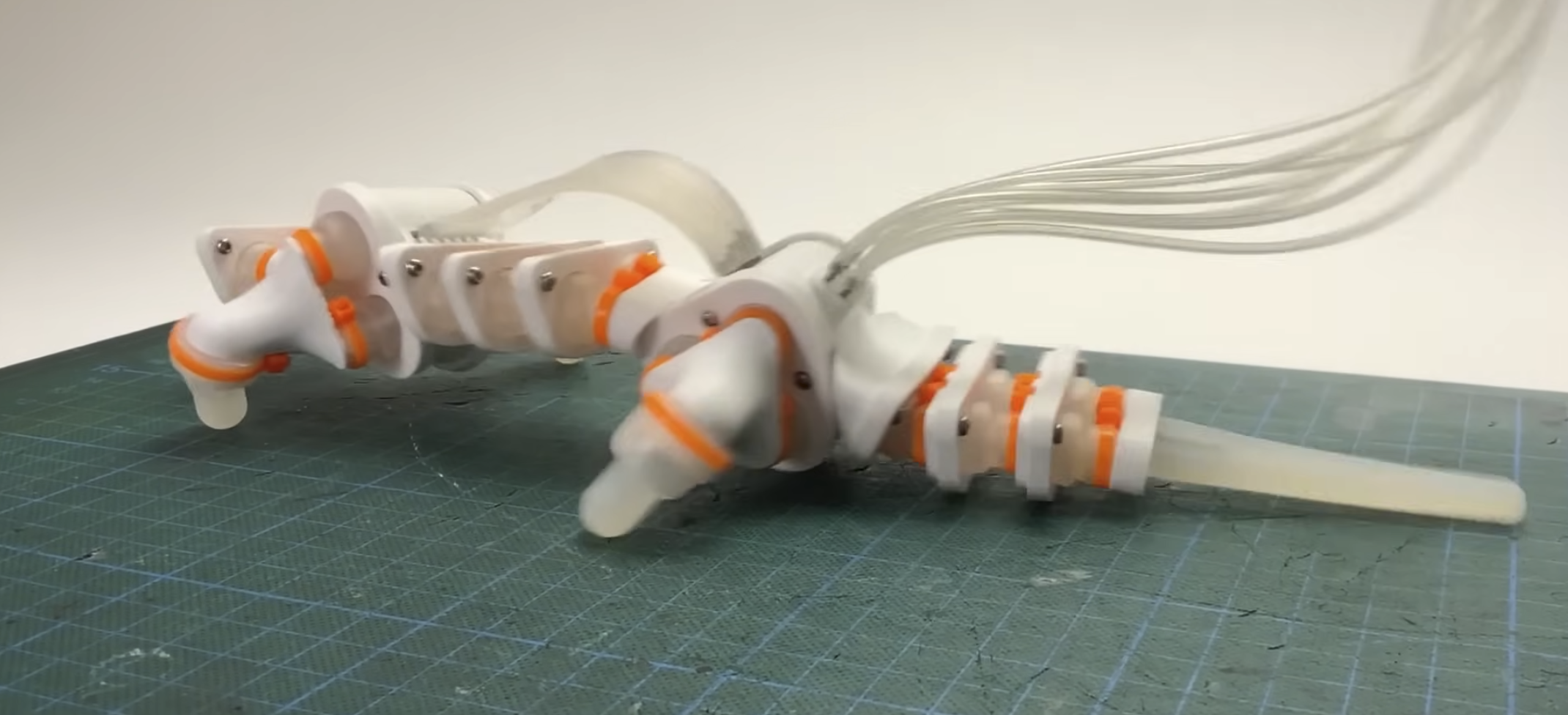
The core microfluidic logic unit is printed directly, while the compliant silicone members are fabricated using bespoke casting molds. Consequently, the robot executes autonomous gait cycles. It is surprisingly elegant.
Yet, how does one achieve an airtight seal using a standard desktop FDM machine? The secret lies in precise slicer parameters, which the creator generously shared with the community. Discard your default profiles: this requires a fundamental shift in slicing logic.
That is the policy landscape. Here is the technical breakdown.
The definitive FDM recipe for airtight prints
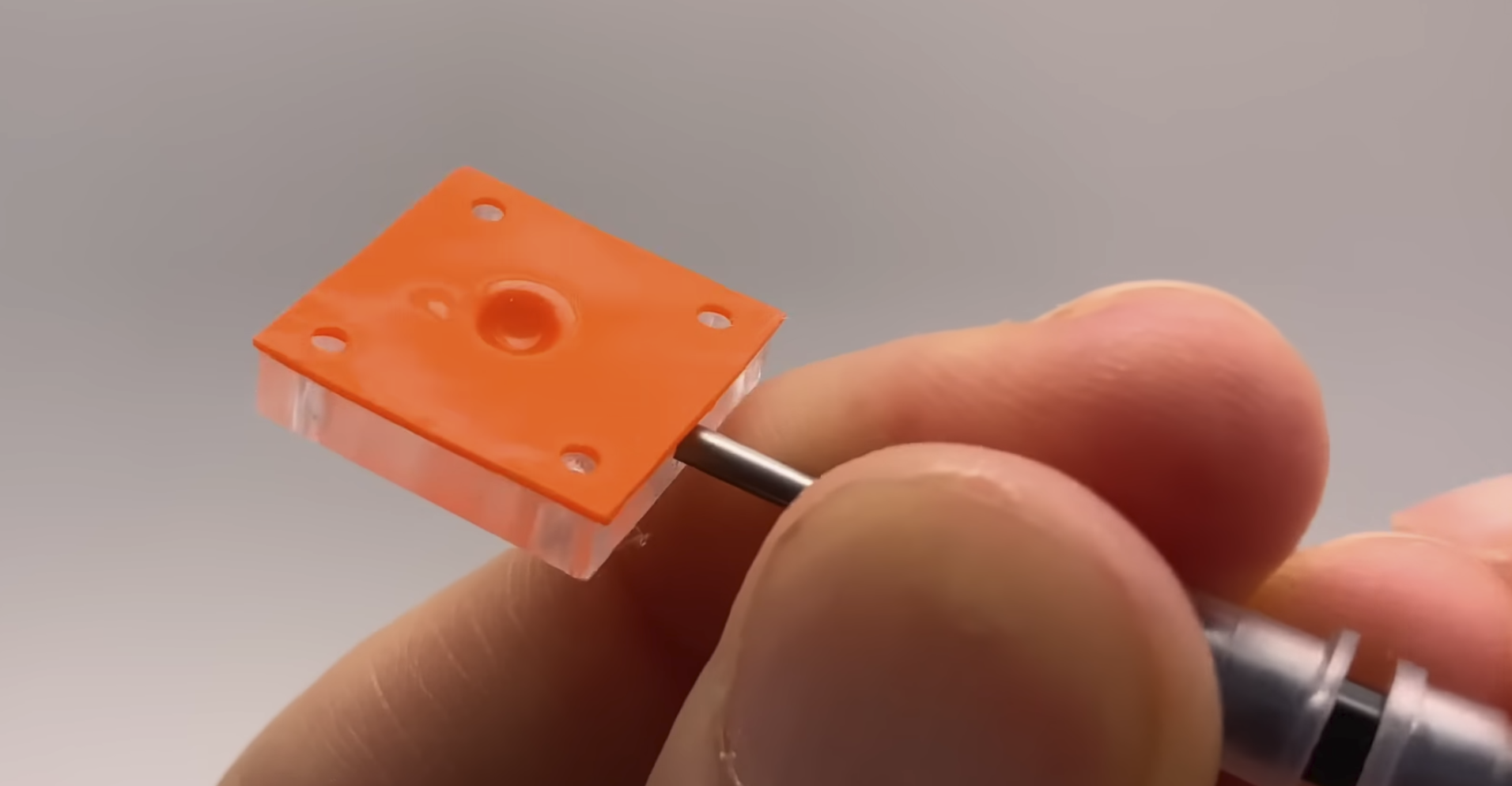
To manufacture fully hermetic, airtight components, the setup utilized 100% infill with an extrusion multiplier (flow rate) calibrated to 105%. On a Bambu Lab printer, the hotend temperature was raised to 230 °C, extruding through a 0.2 mm nozzle at a deliberate speed of just 15 mm/s. This allows adjacent layer lines to fuse homogeneously, yielding a translucent, glass-like internal structure. That is the critical variable.
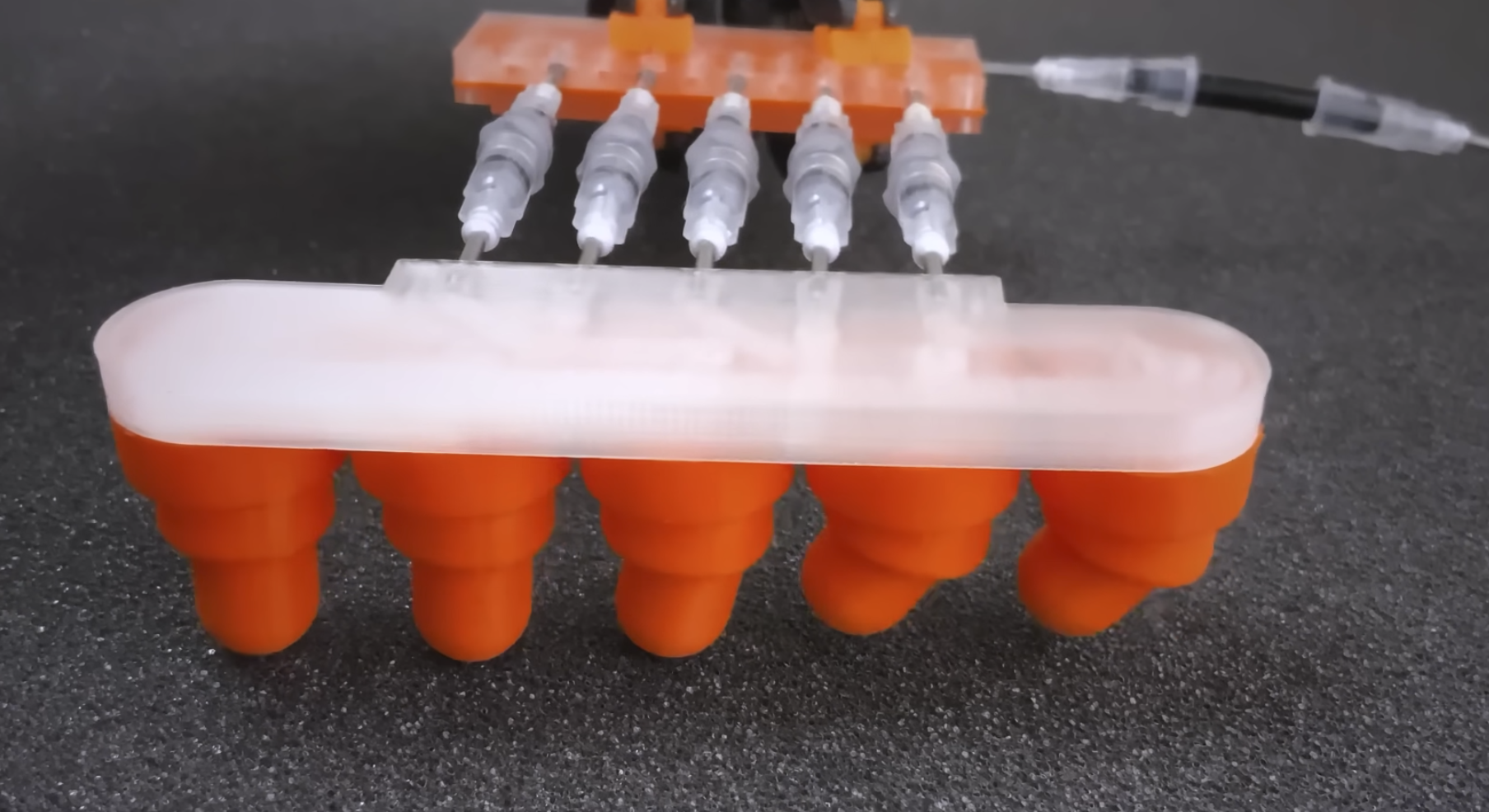
If you assume this technology will remain confined to theoretical research papers, you are mistaken. In his latest release, the creator showcased a fully operational clock driven entirely by a 3D-printed vacuum-microfluidic display. Watching the numerical transitions actuate is both mesmerizing and brilliant. This is the future of compliant mechanisms.
Furthermore, by implementing multiplexing techniques, the system coordinates 16 distinct display segments using merely 8 valves. This architectural approach drastically simplifies pneumatic routing networks, paving the way for significantly more complex displays and articulated kinematic motions without relying on costly electromechanical components.
The DIY and maker ecosystem is steadily expanding, consistently pushing technical capabilities. While sourcing precision-grade silicones and specialized materials can occasionally pose logistical challenges, this project demonstrates that sound engineering creativity routinely outperforms massive budgets. It is time to start experimenting.
To observe these remarkable compliant mechanisms in operation, explore the creator's channel:
Frequently Asked Questions
What is soft robotics?
A subfield of robotics dedicated to constructing articulated systems from compliant, elastic materials (such as silicones or elastomers), frequently drawing inspiration from biomimetic principles.
How do you achieve hermetically sealed, airtight 3D prints?
Complete layer fusion is achieved by printing at low speeds (e.g., 15 mm/s), slight over-extrusion (105% flow), 100% infill, and elevated hotend temperatures relative to standard profiles.
What hardware platform was utilized for this project?
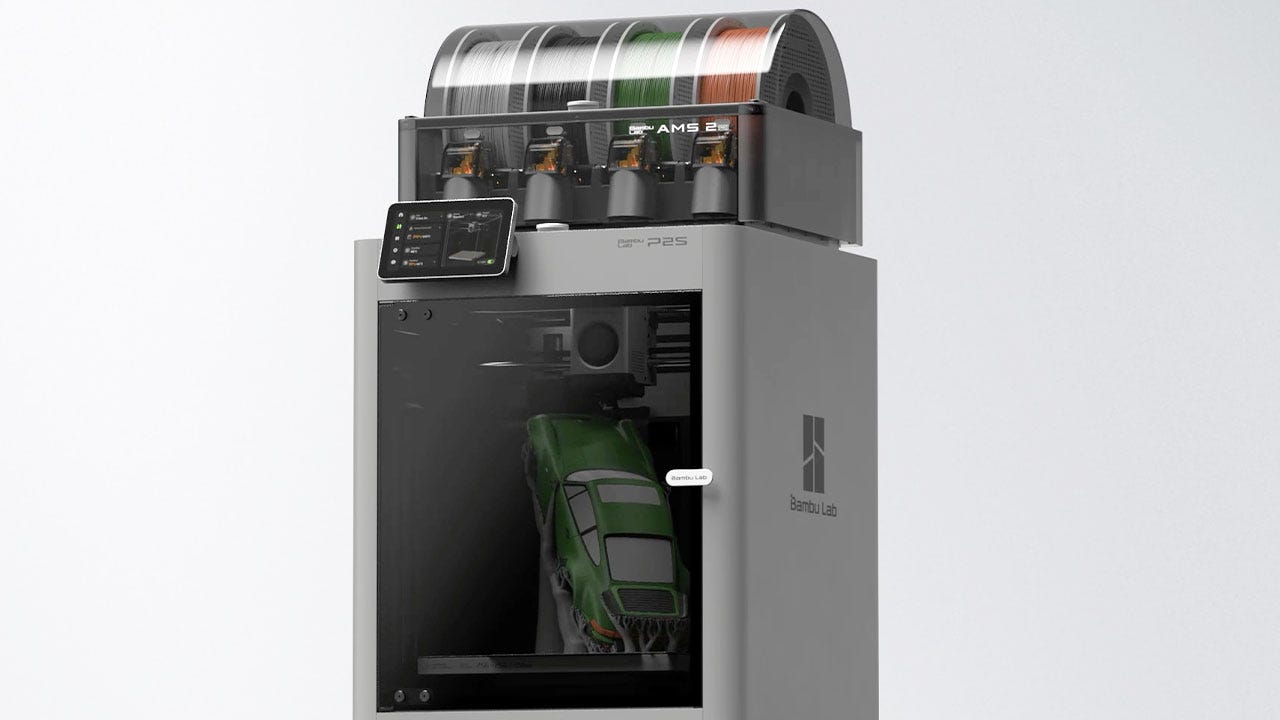
The creator utilized desktop Bambu Lab 3D printers to fabricate both the microfluidic logic channels and the elastomer casting molds.
Source: 3dprint.com / Joris Peels
Share: