When a critical metal component fails on the production line, every minute of downtime incurs severe losses for the company. Cold spray technology holds immense promise for the fast and effective on-site restoration of damaged metal parts; however, engineers have often hesitated to adopt it due to a lack of certified data. Without black-and-white documentation detailing how the material behaves under extreme stress, no responsible plant manager would risk its deployment.
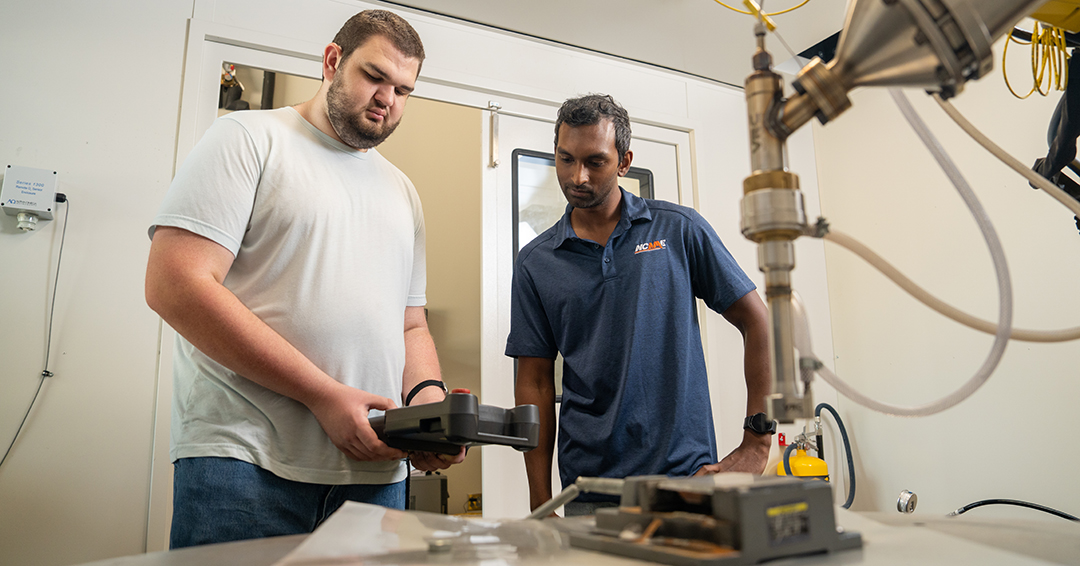
Auburn University's National Center for Additive Manufacturing Excellence (NCAME) and metal powder manufacturer 6K Additive are now joining forces to eliminate this uncertainty. They have launched a comprehensive investigation to provide an accurate characterization of how various metal powders perform under the most severe industrial stresses. Mikyle Paul, the NCAME researcher leading the project, stated that they are gathering vital measurement data directly for the defense and industrial sectors.
Cold spray itself is an ingenious process, as the material is propelled by a supersonic gas jet at temperatures below its melting point, thereby preserving the structural integrity of the substrate. In my experience—and I may be mistaken—most domestic mechanical engineering facilities shy away from emerging technologies primarily because the administrative burden and absence of qualification hold them back. Procurement and maintenance departments cannot install a repaired component that lacks a certified datasheet for tensile strength.
According to the center's laboratory director, Scot Carpenter, armed with rigorous data, companies can finally adopt this repair methodology with confidence. This will allow them to drastically cut costly downtime and avoid unnecessary repair expenses.
Global Collaboration for Standardization
NCAME is not the only team to identify this significant gap in the market. With support from NASA, the University of Utah and Penn State are also working to map the behavior of superalloys such as GRX-810. These research groups are investigating powder particle chemistry and the effects of impact velocity to enhance process predictability.
Meanwhile, Florida International University has expanded its machine park with a WarpSPEE3D system. Their objective is to translate this empirical knowledge to complex geometries in the aerospace and energy sectors, thereby eliminating the need for expensive component remanufacturing.
How Does This Impact Hungarian Plants?
In Hungary, automotive manufacturing facilities and heavy industry suppliers face component shortages and extended lead times daily. If a custom press or machining spindle fails, procuring a replacement part can take weeks, while downtime results in substantial operational losses. With the wider adoption of cold spray locally, Hungarian maintenance service providers could restore production assets not only faster, but far more cost-effectively, circumventing the need for complete component replacement.
Frequently Asked Questions
Why is cold spray superior to conventional welding for repairs?
Because metal powders do not melt during the cold spray process, there is no heat input, thereby preventing workpiece distortion, cracking, and residual thermal stresses while keeping the original microstructure intact.
Which materials are NCAME and 6K Additive focusing on in their research?
The research evaluates the mechanical properties and strength of various metal powder feedstocks supplied by 6K Additive under extreme mechanical and environmental conditions.
How does this research facilitate the wider adoption of the technology?
The project establishes a reliable empirical database that enables engineers and quality assurance professionals to officially qualify and approve repaired components in mission-critical industries.
Source: 3dprintingindustry.com / Paloma Duran
Share: